


Page 19 - CII-ARTHA
P. 19
MARCH 2026


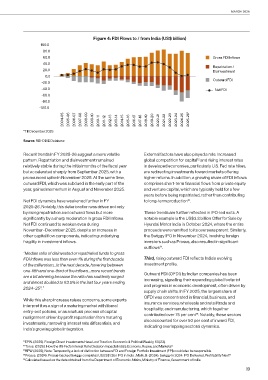
                                          Figure 4: FDI Flows to / from India (US$ billion)
                   100.0
                    80.0
                    60.0                                                                        Gross FDI Inflows
                    40.0
                                                                                                Repatriation /
                    20.0                                                                        Disinvestment
                     0.0
                                                                                                Outward FDI
                    -20.0
                    -40.0                                                                        Net FDI
                    -60.0
                    -80.0
                   -100.0
                             2004-05  2005-06  2006-07  2007-08  2008-09  2009-10  2010-11  2011-12  2012-13  2013-14  2014-15  2015-16  2016-17  2017-18  2018-19  2019-20  2020-21  2021-22  2022-23  2023-24  2024-25  2025-26*


           *Till December 2025
           Source: RBI-DBIE Database


           Recent trends in FY 2025-26 suggest a more volatile   External factors have also played a role. Increased
           pattern. Repatriation and disinvestment remained      global competition for capital  and rising interest rates
                                                                                         12
           relatively stable during the initial months of the fiscal year   in developed economies, particularly U.S. Fed rate hikes,
           but accelerated sharply from September 2025, with a   are redirecting investments toward markets offering
           pronounced spike in November 2025. At the same time,   higher returns. In addition, a growing share of FDI inflows
           outward FDI, which was subdued in the early part of the   comprises short-term financial flows from private equity
           year, gained momentum in August and November 2025.    and venture capital, which are typically held for a few
                                                                 years before being repatriated, rather than contributing
                                                                                    13
           Net FDI dynamics have weakened further in FY          to long-term production .
           2025-26. Notably, this deterioration was driven not only
           by rising repatriation and outward flows but more      These trends are further reflected in IPO-led exits. A
           significantly by a sharp moderation in gross FDI inflows.   notable example is the US$3.3 billion Offer for Sale by
           Net FDI continued to weaken even during               Hyundai Motor India in October 2024, where the entire
           November–December 2025, despite an increase in        proceeds were remitted to its overseas parent. Similarly,
           other capital flow components, indicating underlying   the Swiggy IPO in November 2024, involving foreign
           fragility in investment inflows.                       investors such as Prosus, also resulted in significant
                                                                        14
                                                                 outflows .
           “Median ratio of disinvested or repatriated funds to gross
           FDI inflows was less than even 1% during the first decade   Third, rising outward FDI reflects India’s evolving
           of the millennium…in the next decade, hovering between   investment profile.
           one-fifth and one-third of the inflows…more recent trends
           are a bit alarming because the ratio has suddenly surged   Outward FDI (OFDI) by Indian companies has been
           and almost doubled to 63.5% in the last four years ending   increasing, signalling their expanding global footprint
           2024–25 .”                                            and progress in economic development, often driven by
                   11
                                                                 supply chain shifts. In FY 2025, the largest share of
                                                                 OFDI was concentrated in financial, business, and
           While this sharp increase raises concerns, some experts
           interpret it as a sign of a maturing market with liberal   insurance services; wholesale and retail trade and
           entry-exit policies, or as a natural process of capital   hospitality; and manufacturing, which together
                                                                                        15
           realignment driven by profit repatriation from maturing   contributed over 75 per cent . Notably, these sectors
                                                                 also accounted for over 50 per cent of inward FDI,
           investments, narrowing interest rate differentials, and
           India’s growing global integration.                   indicating overlapping sectoral dynamics.

           11 EPW. (2025). Foreign Direct Investments Have Lost Traction. Economic & Political Weekly, 60(23).
           12 Torus. (2025). How the US Fed’s Interest Rate Decision Impacts India’s Economy, Rupee, and Markets?
           13 EPW (2025); Note: Temporarily, a lack of distinction between FDI and Foreign Portfolio Investment (FPI) could also be responsible.
           14 Prosus. (2024). Prosus-backed Swiggy completes USUS$1.3bn IPO in India.; Malik, B. (2024). Swiggy In 2024: IPO Delivered, Profitability Next?
           14 Calculated based on the data obtained from the Department of Economic Affairs, Ministry of Finance, Government of India
                                                                                                              19

